Starting from scratch
You’ve wanted to try for ages. You can start reading before you even own a pair of skates. The rolling exercises are for when you can skate comfortably on smooth, level ground.
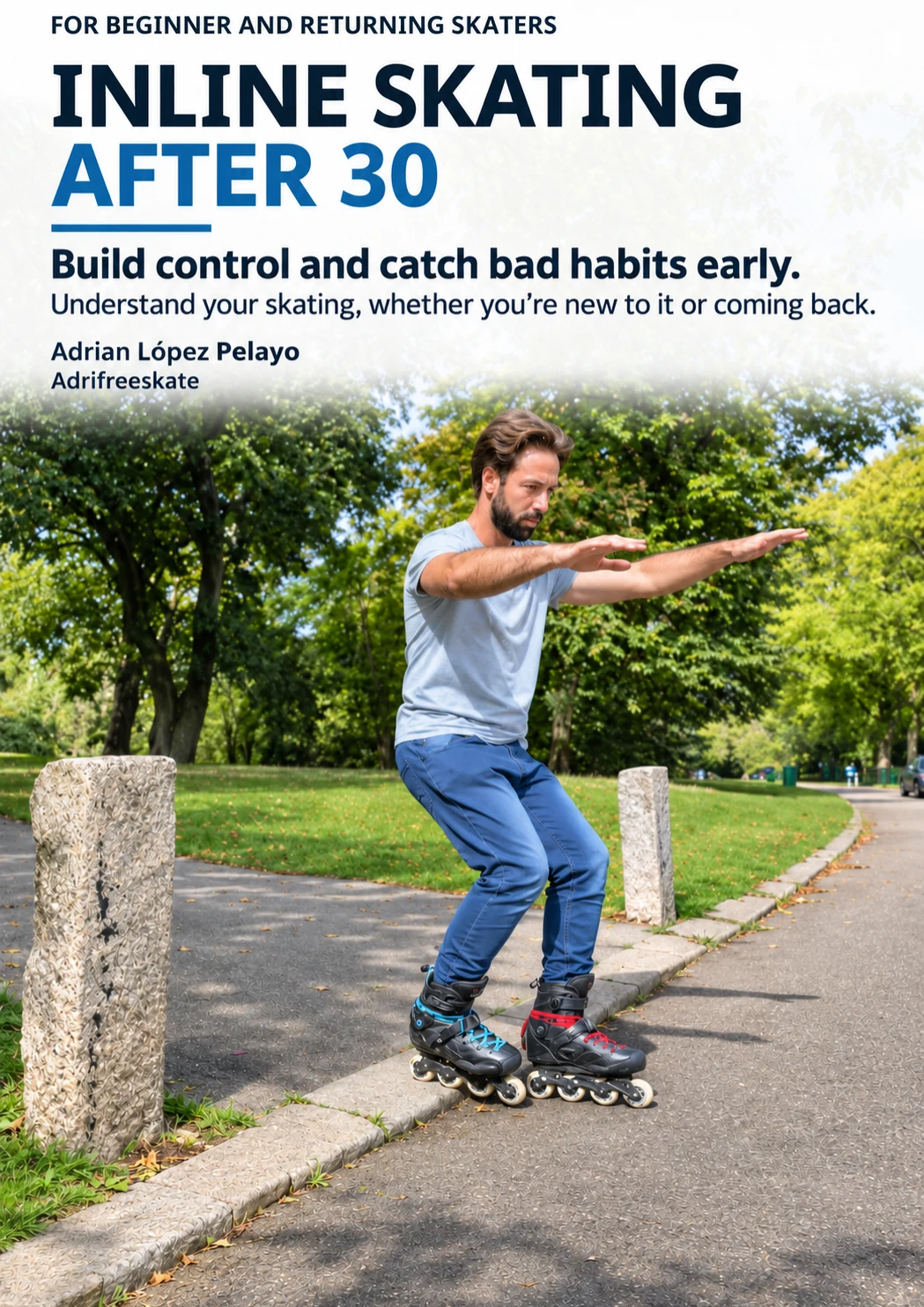
Inline Skating After 30
Whether you’re putting skates on for the first time or coming back after years away, I’ll show you how Technique, Weight Control and Timing work together. You’ll learn what to look for when a move feels awkward and how to catch a bad habit early.
74-page illustrated ebook + four-page fillable Training Planner · US$27, paid once
Maybe you’ve watched someone skate through the park and thought, I’d love to do that. They push with one foot, spend what seems like ages rolling on the other, then change sides just as smoothly. If you’ve never skated, you might already be wondering, How would I stop?
A tutorial can show you what to do and still leave you wondering how to do it. You can see every push. Then you try it yourself and, the moment one foot comes up, you feel like you have to put it straight back down. How does that skater get so comfortable on one foot that they can choose when to take the next stride? And more importantly, how do they stop?
When I ask adults what they’d love to do on skates, a lot of them say they’d be happy just rolling along comfortably and knowing they can stop when they choose. There’s a lovely bit of freedom in hearing a friend say, “Shall we stop here?” and pulling up beside them, still chatting.
Technique, Weight Control and Timing give you a way to understand your own skating. Say a turn suddenly feels smoother than it did a minute ago. I want you to recognise what you did differently, so you can do it again on purpose. And if something keeps feeling awkward, you’ll have a way to work out what to change before it becomes a habit.
You’ve wanted to try for ages. You can start reading before you even own a pair of skates. The rolling exercises are for when you can skate comfortably on smooth, level ground.
You remember how free you felt on skates, even if standing still now takes more concentration than you expected. Maybe you’d love to skate with your kids. Maybe you just miss going out for a roll on your own.
You might turn comfortably one way and hesitate every time you try the other. Whether you feel stuck or you’re curious about what’s already working, you’ll learn to get more from the videos you enjoy and spot details you can use in your own practice.
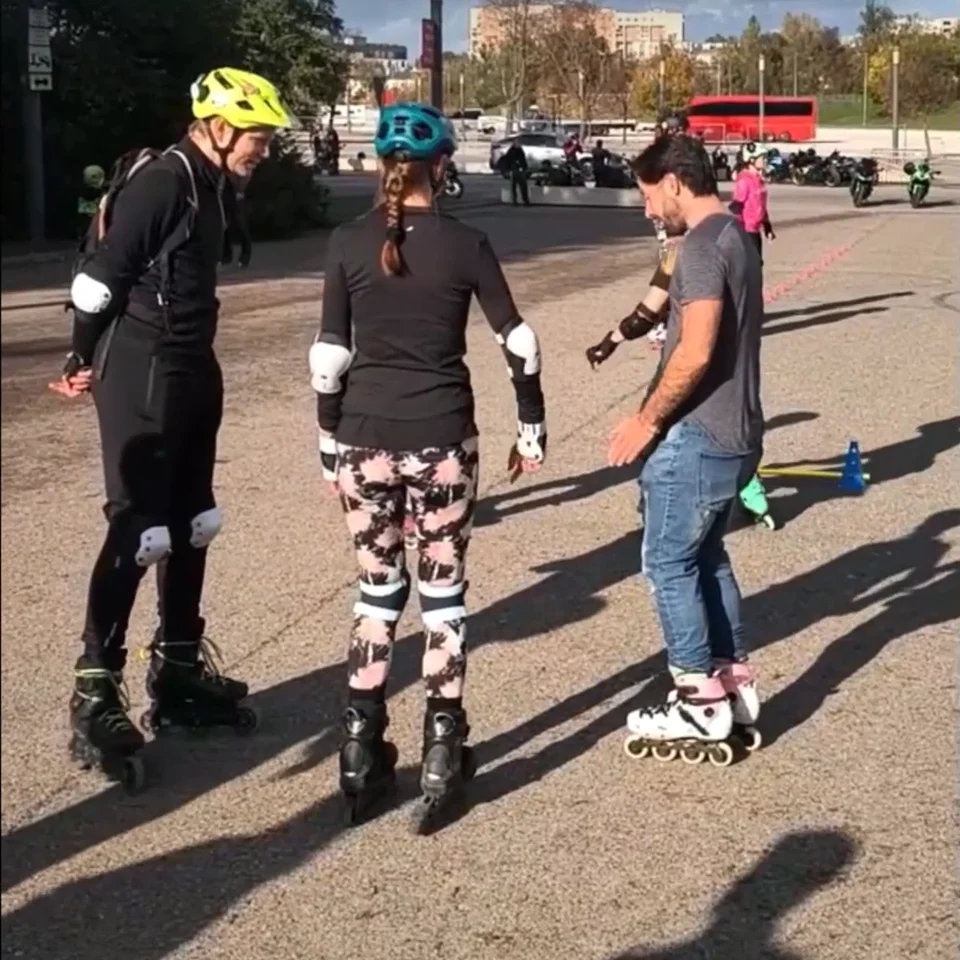
I’m in my 19th year on skates and I’ve competed around the world. I developed this approach for my own skating, and it’s how I teach adults today.
You go for a T-stop and somehow you’re turning. How did that happen? I’ll show you what to look for in the moments before your back skate turns, so you can work out which part to practise.
Maybe you can take your time between pushes on one side, but on the other you’re in a hurry to get that foot back down. The photos give you a reference for both sides. When you watch a clip of your own skating, you can look for what changes on the side that feels harder.
You’re rolling along quite happily, then you see those raised dots before a pedestrian crossing. This is where the Driver comes in. You’ll learn when to use it and how to get comfortable with the position on smooth ground first.
Ever watched a clip of yourself and thought, Hang on, that’s not what it felt like? I’ll show you how to use that difference. The four-page Training Planner gives you somewhere to write down what you noticed and choose one thing to try next time.
Julia · Coaching student
“Learning a new skill can be scary of course, but it's a lot less scary when you are applying the correct technique.”
Mark · Coaching student
Mark had skated a little when he was younger. When he describes how he felt coming back to it, he says, “I had no confidence.” About six months into our lessons, he was out skating in the street and had started learning wizard skating.
I was 15 when I put on a pair of skates in Madrid and headed for Felipe II Square. I can skate that route in three or four minutes now. That day it took me about 25, and I spent a fair bit of it clinging to walls like Spider-Man.
Later, I found the skaters in Retiro Park and learnt by watching them and trying things for myself. One move that gave me trouble was the power slide. I could get into it, but why did I keep turning when I wanted to slide in a straight line? The other skaters I’d seen do it were doing it the same way, just as unsteady as I was. I was copying the only examples I had.
It took me ages to spot that I was looking over the wrong shoulder. By then it felt so natural that I had to learn the slide all over again. Experiences like that changed how I watched other skaters. I started looking a little earlier. What had they done to get ready for the part I was trying to copy?
Over time, that became my way of understanding skating through Technique, Weight Control and Timing. I worked it out for my own skating first. Today it’s how I help my students make sense of theirs. I wrote this guide for the days you’re out practising on your own and wish you had someone beside you to explain what you’re missing.
When I watch someone skate, I ask three questions. What are their body and skates doing? Where is their weight going? When does each part happen? That’s what I mean by Technique, Weight Control and Timing.
We start with the Driver for rough pavement, then look at one-foot balance and the T-stop. You can read through the steps and use the photos as a reference even before you’re ready to try a move. The rolling exercises are for when you can already skate on smooth, level ground at a speed you’re comfortable with.
Choose an exercise and try it on both sides. Take a short clip with your whole body and both skates in view, from the preparation to the finish. Use Your Next Attempt Worksheet to compare what you felt with what you can actually see.
Once you’ve read the guide, use the Training Planner to choose one thing to focus on for each exercise. I’ve included a sample week with two sessions. Only skating once this week? Pick up the second session the next time you go out.
US$27 · One-time payment for both PDFs
“What did I feel, and what did the recording show?”
That’s a question from the Training Planner. Say you thought you were looking ahead through both turns. Then you watch the clip. On the right turn, you’re looking where you want to go. On the left, you’re looking straight down at your skates.
Your note for next time can be that simple. Left turn. Look where I want to go.

Picture a Sunday morning in the park. You and a friend are heading for the café on the far side. They’re telling you a story, and halfway round you realise you’ve been looking around and following every word. You remember when just keeping your balance took all that attention.
As the café comes into view, you ease off, take the bend and stop where you meant to. There’s a queue out the door. You look back at your friend. “Fancy one more lap?”
Half an hour is worth getting your skates on for. Pick one thing you’d like to feel more comfortable doing. Give it a few tries on each side while you’re fresh, enjoy a roll, then come back to it before you finish. Write down what felt different so you know what to work on next time.
A wobble on its own tells me very little about ankle strength. I’d look at your boots and your edge control first. Many fitness skates sold to beginners have a soft boot. For learning, I recommend a well-fitting freeskate with a rigid shell that holds your heel in place.
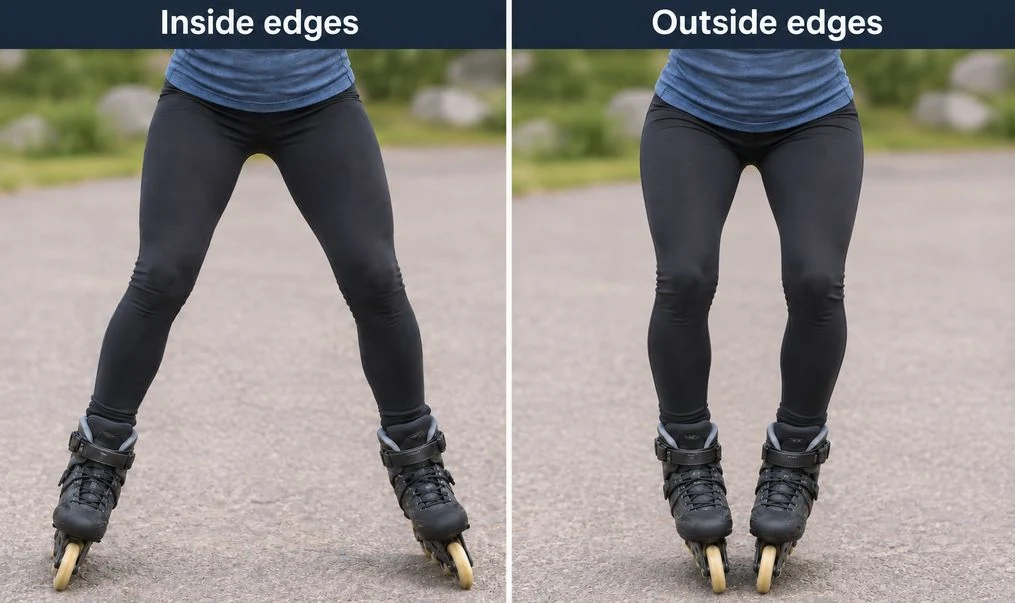
Then watch what happens as you put your weight on one skate. Does it tip inwards when you want it upright? The guide shows you what inside and outside edges look like. With practice, you learn to feel those small changes and choose how far each skate tilts.
No. The adults I teach are usually between 35 and 60. Some are putting skates on for the first time, and my most advanced student is in her fifties.
You can start reading before your first skate. Give yourself time to learn to stand up and take your first strides. You can practise those on your own, follow my separate beginner’s course on video or get a hand in person. Once you can roll on smooth, level ground at a speed you’re comfortable with, you’re ready for the rolling exercises in the book.
It teaches you what to look for when you watch someone skate. I use three illustrated examples to explain Technique, Weight Control and Timing. We start with the Driver for rough pavement, then work through one-foot balance and the T-stop. When you watch a demonstration or a clip of yourself, you can ask questions like Where did the weight go? What changed between those two attempts? You’ll have a way to analyse your own progress and decide what to practise next.
Once you can stand up on skates, the next thing I teach is how to fall and get back up. It’s easier to try a new movement when you’ve already practised what to do if you lose your balance. The ebook doesn’t cover falling technique. You can practise it on your own by following a beginner video that shows the whole movement, or with an instructor if you’d like feedback.
Wear a helmet, knee pads, elbow pads and wrist guards. Start low on a mat with your wheels still. For a controlled forward fall, lower yourself onto your knee pads first, then bring your protected hands down with your elbows slightly bent.
I recommend a couple of sessions a week. At Adrifreeskate Academy, we have a week of classes followed by a week to practise what we’ve covered. During that practice week, my face-to-face students can go back to their online course videos and ask questions in our community chat.
You can use the same idea with the guide. Spend part of your session trying something new, then go back to something you worked on last time. And yes, going for a roll round the park counts as practice too.
Most of the students I coach in person notice a difference in their first session with the Three Pillars. Often, within the first hour, they feel more comfortable on their skates and find their balance more easily. Learning to correct yourself helps you improve faster when you practise on your own. Once you recognise why one attempt felt better, you know what to try again.
No. If your skates fit well and give you enough support, start with the pair you have. If you’re choosing a pair for the kind of skating in this guide, I recommend a freeskate boot with a rigid shell.
No. You can use Your Next Attempt Worksheet to review your own clips and compare what you felt with what you can see. If there’s a particular skill you want to work on and you’d like to see me break it down on video, that’s what my separate online technique courses are for.
One payment covers two downloadable PDFs. You get Inline Skating After 30, the 74-page illustrated ebook, and a separate four-page fillable Training Planner. You can fill in the planner on your device or print a copy to take skating.